

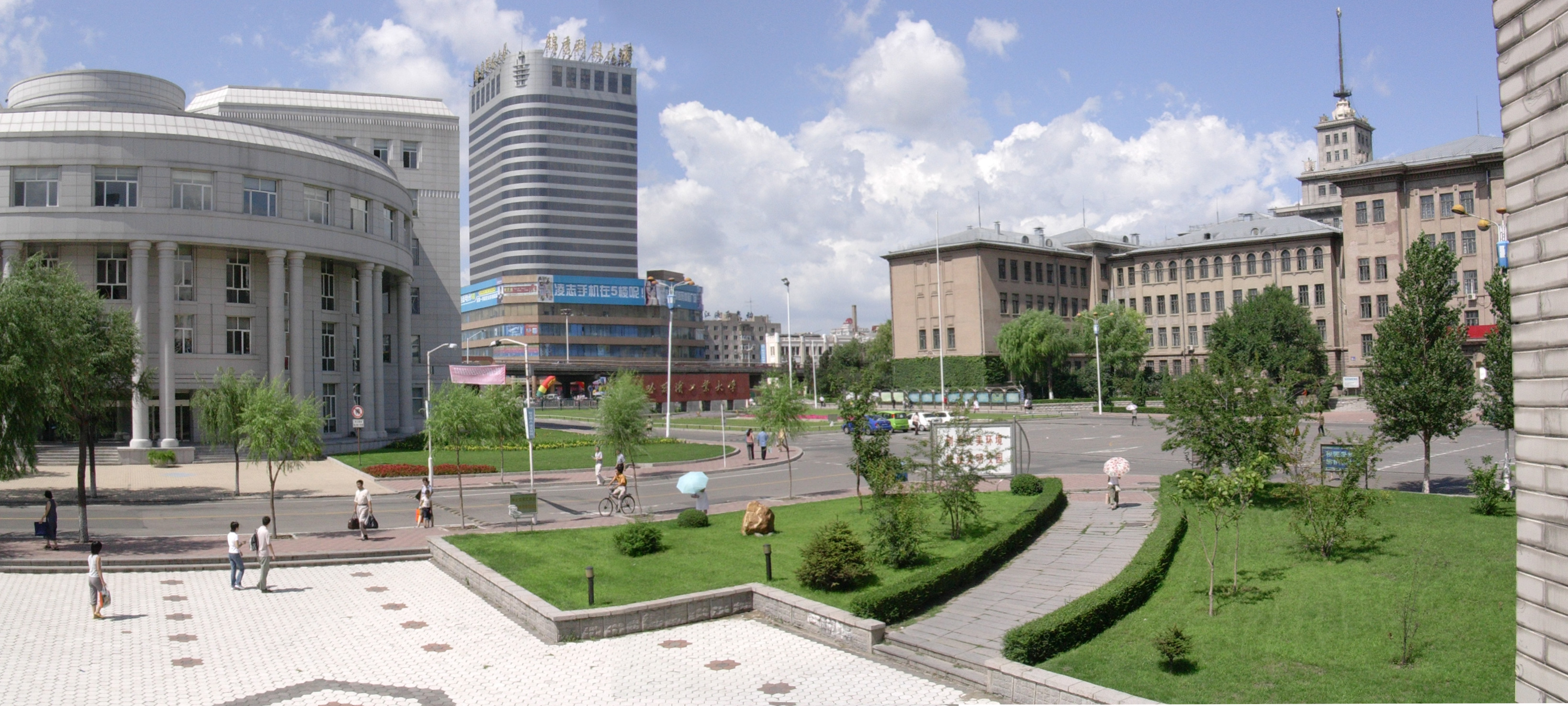
Harbin, China
Harbin Institute of Technology
哈尔滨工业大学 · HIT
A leading C9 university known for engineering and technology, with Chinese-taught degrees and selected English-taught options across architecture, design and management.
Everything you need to know before applying to HIT — from language and entry requirements to CSCA, programmes, costs, scholarships and student life.
✓ Verified against official HIT undergraduate sourcesLast updated 14 July 2026
About HIT
Overview
Harbin Institute of Technology is a public C9 research university particularly known for aerospace, robotics, computing, electronics, materials, energy and infrastructure. Its Harbin campus combines a strong engineering focus with a broad 2026/27 international undergraduate catalogue.
Most listed majors are taught in Chinese, while selected subjects also have an English-taught option. Undergraduate programmes generally take four to five years, and an English-taught class needs at least 20 students to open, so consider a Chinese-taught or alternative programme as a backup.
Why choose HIT
Elite engineering strengths, selected English-taught options and lower day-to-day costs than Beijing or Shanghai.
What to watch
CSCA is compulsory, English cohorts can be cancelled below 20 students, and Harbin winters are exceptionally cold.
Best-fit student
You have strong quantitative results and want aerospace, robotics, computing, materials, energy, architecture or infrastructure.
Not ideal for
You want a broad humanities catalogue, a guaranteed small English cohort or a mild climate.
Study language
Language requirements
HSK Level 4 with 210+
Chinese-taught applicants, except those applying for Chinese Language and Literature, need HSK Level 4 with at least 210, valid for two years. A certificate confirming previous Chinese-medium study can be used instead, subject to HIT's review.
IELTS 6.0+ or TOEFL iBT 80+
English-taught applicants need Academic IELTS above 6.0 with no subtest below 5.5, TOEFL iBT above 80, another accepted qualification, or proof that their secondary education was taught in English.
Academic fit
Entry requirements
| Qualification | Official HIT requirement | ChinaStudyGuide estimate |
|---|---|---|
| A-Level | No general minimum score published | AAB–AAA; higher for computing, AI and aerospace |
| IB | No general minimum score published | 34–38+ with strong relevant Higher Level subjects |
| SAT / AP | No general minimum score published | SAT 1350–1450+ with strong relevant AP results |
| UEC / regional qualifications | No qualification-specific minimum published | Strong results in mathematics and subjects relevant to the major |
| Other | High-school diploma and transcripts required; no general minimum score published | Strong national-curriculum results with clear subject fit |
HIT requires a high-school diploma or expected-graduation certificate and transcripts but does not publish general minimum scores. The competitive targets above are ChinaStudyGuide planning guidance based on selectivity and subject context; they are not official admission requirements.
Admissions assessment
CSCA
CSCA is required before HIT reviews any international undergraduate application. Upload the score report with your documents.
Do I need CSCA?
- Chinese-taught STEM: Chinese for STEM, Mathematics, and Physics or Chemistry according to the major
- Chinese-taught humanities, design and management: Chinese for Humanities and Mathematics
- English-taught: Mathematics plus Physics or Chemistry for science and engineering; Mathematics for humanities, design and management
Use HIT's 2026/27 major catalogue to confirm the exact combination for your target subject, then check the official CSCA website for dates, registration, syllabi and score validity. Always check the official catalogue before registering for CSCA.
How to apply
Admission route
International undergraduate application
HIT uses one online academic application for its Chinese- and English-taught undergraduate options.
- Application window
- Open year-round; 15 July 2026 deadline for September 2026 entry
- Language
- HSK 4 with 210+ for Chinese-taught study, or IELTS/TOEFL/equivalent for English-taught study
- Assessment
- Document, language and CSCA review; no separate HIT entrance test or interview is published for this intake
- Funding
- Self-financed study uses the same academic route. HIT Scholarship and CSC funding have separate rules and deadlines.
From testing to arrival
Application process
- 1Choose your programme and language
Use the 2026/27 catalogue to confirm the teaching language and exact CSCA papers for your intended subject.
- 2Complete CSCA and language testing
Obtain the required CSCA score report plus HSK, IELTS, TOEFL or proof that your secondary education was taught in English.
- 3Prepare your documents
Collect academic records, passport, CV, health and police documents, financial evidence and any required guardian form.
- 4Apply online
Complete HIT's application form, upload scans and pay RMB 400 for self-financed study or RMB 600 for an HIT Scholarship application.
- 5Wait for the application review
HIT reviews your academic results, language evidence, CSCA scores and supporting materials.
- 6Receive the decision
Monitor the application system and email for the admission or scholarship outcome and any follow-up request.
- 7Visa and registration
Use the issued admission and JW documents for the student visa, then register in Harbin with original documents.
Documents to prepareAcademic records, CSCA, language, health, identity and financial documents
Start early
HIT accepts online uploads only. Documents not issued in Chinese or English require notarised translations, and the original diploma must be shown at registration.
Prepare your high-school diploma or expected-graduation certificate together with complete high-school transcripts.
Provide HSK 4 with 210+, IELTS, TOEFL, another accepted qualification, or accepted proof of your school's teaching language.
Upload the correct CSCA combination for your major exactly as shown in HIT's 2026/27 catalogue.
- 04Passport identification page
- 05Curriculum Vitae
- 06Foreigner Physical Examination Record and non-criminal record, each valid within six months
- 07Application-fee remittance voucher showing your passport name
- 08Bank statement or bank deposit certificate for at least RMB 20,000 or equivalent
- 09Notarised guardian certificate if under 18 on 1 September 2026, plus optional achievement evidence
Before you submit
Your readiness checklist
Academic choice
Subjects
Search HIT's official 2026/27 undergraduate programmes. Majors marked as having an English option still require a cohort of at least 20 students.
Search by subject, school or teaching language.
| Major / option | Subject area | School / grouping | Teaching language |
|---|---|---|---|
| Automation | Aerospace / Electronics | School of Astronautics | Chinese / English option |
| Intelligent Equipment and System | Aerospace / Electronics | School of Astronautics | Chinese |
| Detection Guidance and Control Technology | Aerospace / Electronics | School of Astronautics | Chinese |
| Integrated Circuit Design and Integrated System | Aerospace / Electronics | School of Astronautics | Chinese / English option |
| Microelectronics Science and Engineering | Aerospace / Electronics | School of Astronautics | Chinese |
| Intelligent Vision Engineering | Aerospace / Electronics | School of Astronautics | Chinese |
| Communication Engineering | Electronics | School of Electronics and Information Engineering | Chinese / English option |
| Electronic Information Engineering | Electronics | School of Electronics and Information Engineering | Chinese / English option |
| Information Countermeasure Technology | Electronics | School of Electronics and Information Engineering | Chinese |
| Intelligence Science and Technology | Electronics | School of Electronics and Information Engineering | Chinese |
| Electrical Engineering and Automation | Electrical Engineering | School of Electrical Engineering and Automation | Chinese / English option |
| Energy Internet Engineering | Electrical Engineering | School of Electrical Engineering and Automation | Chinese |
| Statistics | Mathematics | School of Mathematics | Chinese |
| Computer Science and Technology | Computing | Faculty of Computing | Chinese / English option |
| Artificial Intelligence | Computing | Faculty of Computing | Chinese / English option |
| Information Security | Computing | Faculty of Computing | Chinese |
| Software Engineering | Computing | Faculty of Computing | Chinese |
| Mechanical Design Manufacturing and Automation | Mechanical / Robotics | School of Mechatronics Engineering | Chinese |
| Flight Vehicle Manufacturing Engineering | Mechanical / Robotics | School of Mechatronics Engineering | Chinese |
| Robot Engineering | Mechanical / Robotics | School of Mechatronics Engineering | Chinese / English option |
| Intelligent Manufacturing Engineering | Mechanical / Robotics | School of Mechatronics Engineering | Chinese / English option |
| Bionic Science and Engineering | Mechanical / Robotics | School of Mechatronics Engineering | Chinese |
| Materials Science and Engineering | Materials | School of Materials Science and Engineering | Chinese / English option |
| Material Forming and Controlling Engineering | Materials | School of Materials Science and Engineering | Chinese |
| Welding Technology and Engineering | Materials | School of Materials Science and Engineering | Chinese / English option |
| Photoelectric Information Materials and Devices | Materials | School of Materials Science and Engineering | Chinese |
| Electrical Encapsulation Technology | Materials | School of Materials Science and Engineering | Chinese |
| Energy and Power Engineering | Energy / Engineering | School of Energy Science and Engineering | Chinese / English option |
| Aircraft Power Engineering | Energy / Engineering | School of Energy Science and Engineering | Chinese |
| Nuclear Engineering and Technology | Energy / Engineering | School of Energy Science and Engineering | Chinese |
| Energy Storage Science and Engineering | Energy / Engineering | School of Energy Science and Engineering | Chinese |
| Precise Instrument | Instrumentation | School of Instrumentation Science and Engineering | Chinese |
| Intelligent Perception Engineering | Instrumentation | School of Instrumentation Science and Engineering | Chinese |
| Measurement and Testing Technology and Instrument | Instrumentation | School of Instrumentation Science and Engineering | Chinese / English option |
| Civil Engineering | Civil Engineering | School of Civil Engineering | Chinese / English option |
| City Underground Space Engineering | Civil Engineering | School of Civil Engineering | Chinese |
| Intelligent Construction | Civil Engineering | School of Civil Engineering | Chinese / English option |
| Road Bridge and River Crossing Engineering | Transportation | School of Transportation Science and Engineering | Chinese |
| Traffic Engineering | Transportation | School of Transportation Science and Engineering | Chinese / English option |
| Intelligent Transportation | Transportation | School of Transportation Science and Engineering | Chinese |
| Chemical Engineering and Technology | Chemistry / Engineering | School of Chemistry and Chemical Engineering | Chinese / English option |
| Polymer Materials and Engineering | Chemistry / Engineering | School of Chemistry and Chemical Engineering | Chinese |
| Applied Chemistry | Chemistry / Engineering | School of Chemistry and Chemical Engineering | Chinese |
| Environmental Engineering | Environment | School of Environment | Chinese / English option |
| Environmental Science | Environment | School of Environment | Chinese |
| Water Supply and Sewerage Engineering | Environment | School of Environment | Chinese |
| City Water System Engineering | Environment | School of Environment | Chinese |
| Biological Technology | Life Sciences | Faculty of Life Science and Medicine | Chinese |
| Biological Engineering | Life Sciences | Faculty of Life Science and Medicine | Chinese / English option |
| Bioinformatics | Life Sciences | Faculty of Life Science and Medicine | Chinese |
| Intelligent Medical Engineering | Life Sciences | Faculty of Life Science and Medicine | Chinese / English option |
| Sociology | Humanities / Social Sciences | Faculty of Humanities and Social Sciences | Chinese / English option |
| Russian | Humanities / Social Sciences | Faculty of Humanities and Social Sciences | Chinese |
| Law | Humanities / Social Sciences | Faculty of Humanities and Social Sciences | Chinese |
| International Organizations and Global Governance | Humanities / Social Sciences | Faculty of Humanities and Social Sciences | Chinese / English option |
| Chinese Literature | Humanities / Social Sciences | Faculty of Humanities and Social Sciences | Chinese |
| Building Environment and Energy Application Engineering | Architecture / Design | School of Architecture and Design | Chinese / English option |
| Digital Media Art | Architecture / Design | School of Architecture and Design | Chinese / English option |
| Product Design | Architecture / Design | School of Architecture and Design | Chinese / English option |
| Architecture | Architecture / Design | School of Architecture and Design | Chinese / English option |
| Urban and Rural Planning | Architecture / Design | School of Architecture and Design | Chinese / English option |
| Information Management and Information System | Management / Data | School of Management | Chinese |
| Big Data Management and Application | Management / Data | School of Management | Chinese / English option |
| Computational Finance | Management / Data | School of Management | Chinese |
| Digital Economy | Management / Data | School of Management | Chinese / English option |
| Business Management | Business | Business School | Chinese / English option |
| Accounting | Business | Business School | Chinese |
No matching subject found.
View the official major catalogue and CSCA attachment ↗Budget planning
Fees & funding
Funding your degree
Scholarships
| Scholarship | Typical cover | Difficulty | CSCA? | Key note |
|---|---|---|---|---|
| Chinese Government Scholarship Type A | Tuition, accommodation, insurance and living allowance | Very high | Yes | Apply through the relevant Chinese embassy or consulate and list HIT as first-priority institution. |
| HIT Scholarship — Elite | 100% tuition waiver | Very high | Yes | Confirm the applicable deadline directly with HIT because its official undergraduate and scholarship pages currently differ. |
| HIT Scholarship — First, Second or Third | 50%, 30% or 20% tuition waiver | High | Yes | Scholarships are renewed each year based on academic performance. Applicants cannot apply for CSC and HIT scholarships simultaneously. |
Where you may live
Accommodation
Housing availability can change each intake. Keep an off-campus backup until HIT confirms your dormitory place. Applicants under 18 on 1 September 2026 must submit a notarised guardianship certificate.
Life in Harbin
Student life
HIT offers an engineering-focused campus environment in one of China's most distinctive northern cities, with lower living costs and a winter climate that shapes daily life.
Campus
Laboratories, design projects, engineering competitions and hands-on problem solving play a central role in HIT's academic culture.
City
Harbin is known for Russian-style architecture, the winter ice festival, hearty food and a generally lower cost of living than Beijing or Shanghai.
Climate
Winters are long and extremely cold. Budget for proper winter clothing and consider whether you will enjoy several months of snow and sub-zero temperatures.
Career opportunities
HIT is especially well suited to students interested in aerospace, robotics, computing, electronics, materials, energy, infrastructure or postgraduate research.
Compare choices
Compare other universities
Not sure whether HIT is the right fit? Compare it with other leading Chinese universities by city, subject strengths, teaching language, admissions, costs and student life.
This page covers undergraduate study only and was checked on 14 July 2026. The self-financed application remains open until 15 July 2026. HIT's official undergraduate and scholarship pages currently publish different scholarship deadlines, so applicants should confirm the applicable deadline directly with HIT.
- 2026 bachelor application guide, fees and major attachment ↗
- HIT International Students Scholarship ↗
- HIT online application system ↗
- QS World University Rankings 2027 profile ↗
- CSCA official website ↗
- HIT official English website ↗
- Campus photograph by Jing Jin, CC BY-SA 3.0 ↗
Deadlines, English-class availability, tuition, CSCA combinations, scholarships and accommodation can change. Competitive grade targets and non-published living costs are ChinaStudyGuide estimates, not official HIT requirements.